The Memory of Water
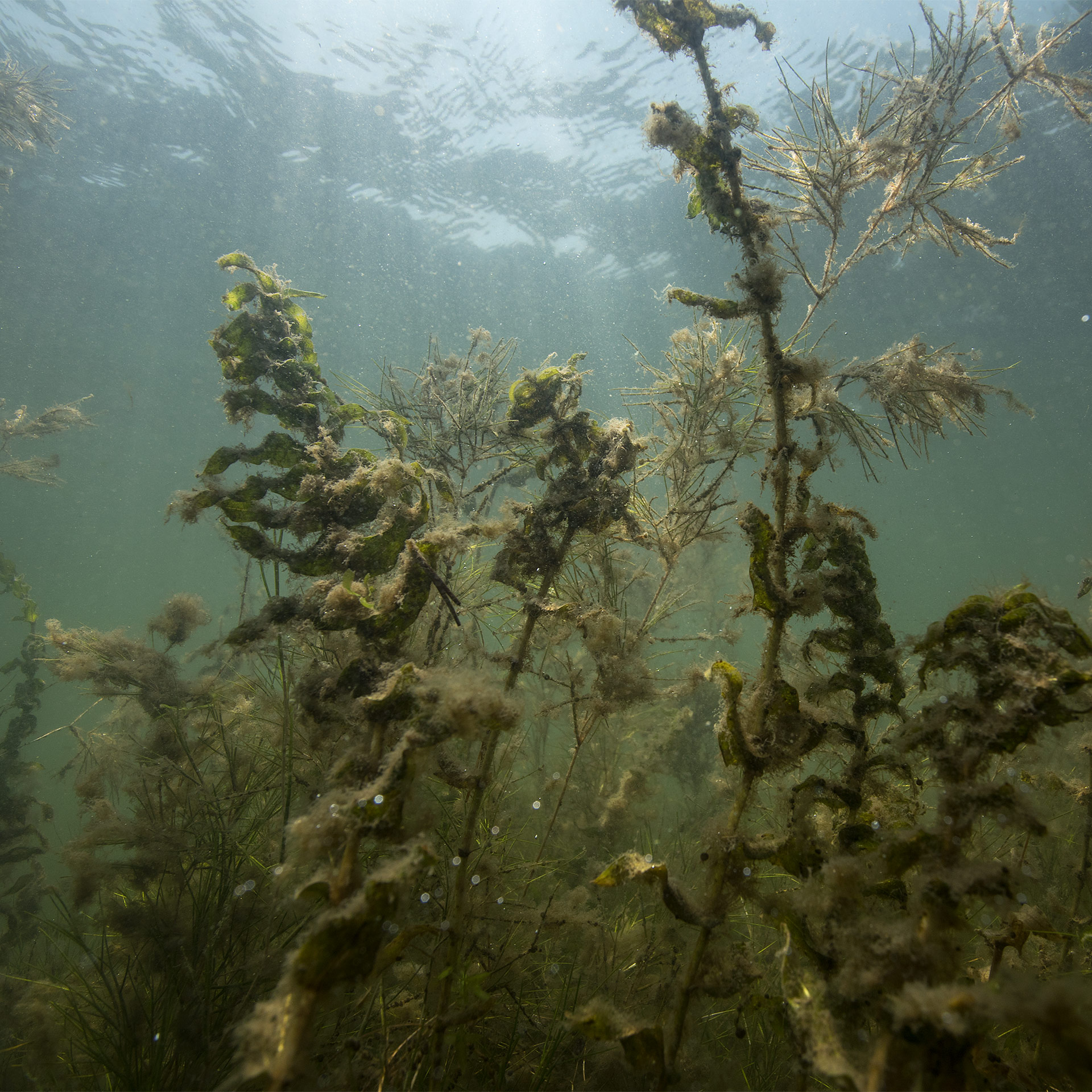
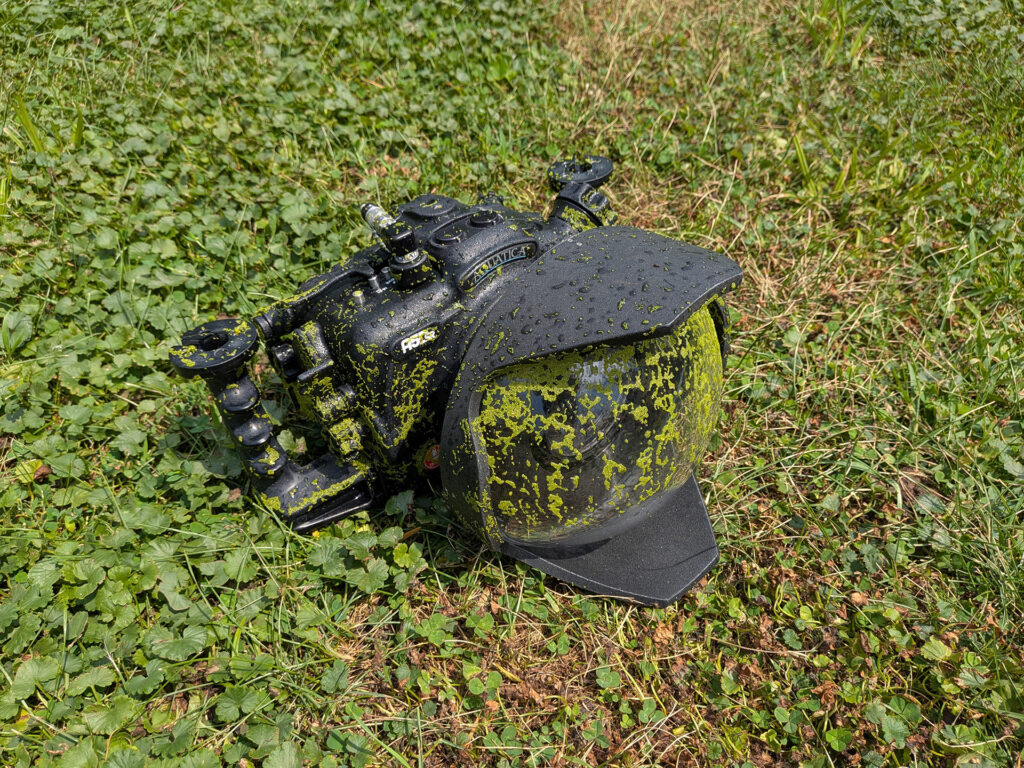
For nearly twenty years, I have been developing a body of underwater photography. I began this work in 2008, when I purchased a watertight housing for my 35 mm digital camera. My photographic explorations have taken me to numerous locations across North America, including Florida, Louisiana and the Oregon coast. Over time, I have upgraded my equipment while also seeking to renew my approach by exploring different waterways and experimenting with the camera.
This artistic research emerged from a personal experience. I grew up near a polluted river and, over many years, observed the transformations taking place in that waterway, the evolution of its ecosystems and the disappearance of the animal species that once lived there. I wanted to create a body of images capable of bearing witness to these changes resulting from human activity. These immersive photographs plunge viewers into the heart of aquatic ecosystems and question our relationship with water, while also reminding us of its vital importance.
Initially, my intention was primarily to reveal the other side of underwater photography, which often produces polished, alluring and spectacular images. In the context of the ecological crisis, it seemed more necessary to me to explore altered aquatic environments. I therefore immersed my camera in several industrial sites and polluted rivers. The degradation of aquatic environments is undoubtedly one of the most pressing environmental issues of our time. Although the project focuses mainly on the alteration of ecosystems, I have also photographed aquatic plants, salt marshes and intertidal wetlands in different regions. These environments face numerous natural and environmental threats, yet they remain resilient. The clarity and striking beauty of these submerged worlds remind us that the natural world can still play a central role in how we inhabit the Earth, awakening a heightened awareness and sensitivity to the world around us.
The images I create are not simply photographs. I rework them to develop compositions, often assembling them to create horizontal and vertical panoramas. Using image-processing software, I create photomontages while respecting the integrity of the places documented. I consider these compositions, above all, to be testimonies that possess documentary value.
West Okoboji from Below
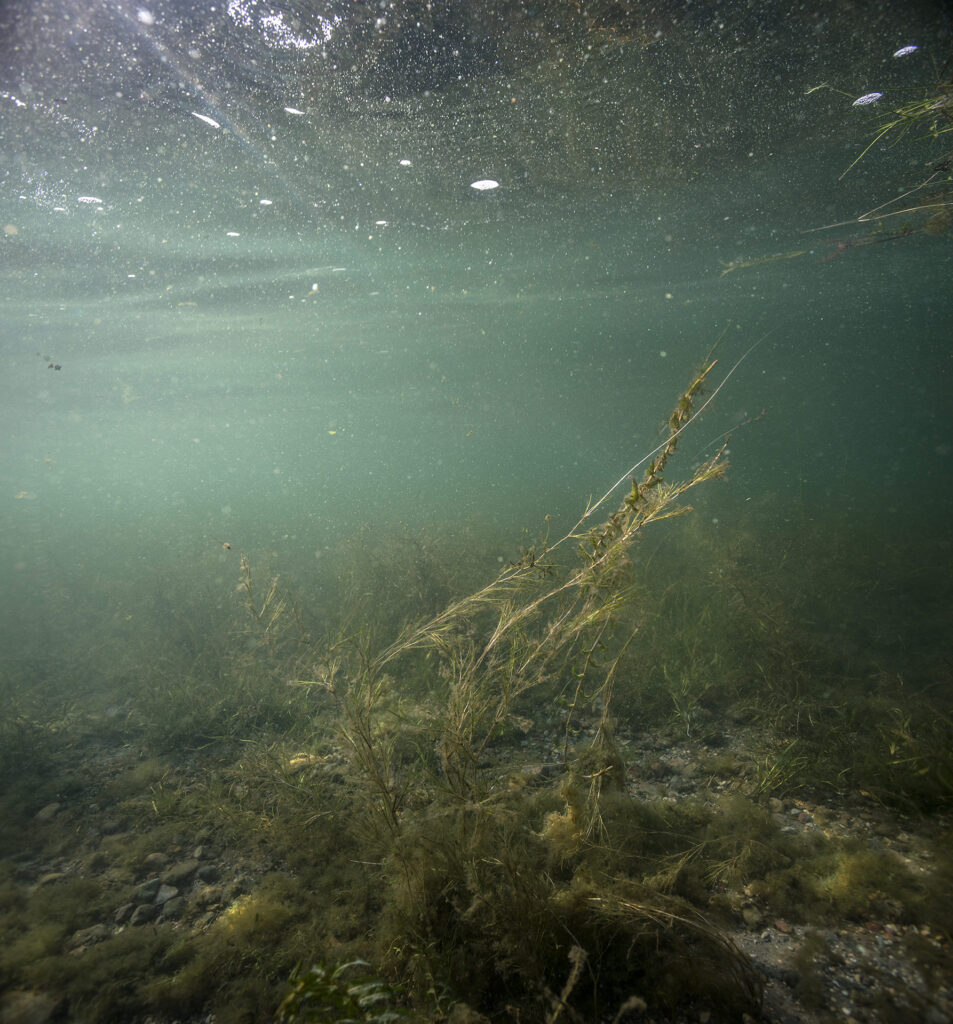
During my residency at Iowa Lakeside Laboratory, I photographed several sites on West Okoboji Lake. What initially interested me in this landscape was the exploration of its shallow bays, where abundant aquatic vegetation forms extensive beds. Among the species found there is Vallisneria americana, a native species of calm, shallow waters, recognizable by its long, supple, ribbon-like leaves.
Compared with the neighbouring lakes—Spirit Lake, East Okoboji and Center Lake—West Okoboji is considerably less affected by cyanobacterial blooms, commonly known as “blue-green algae.” In calm weather, the water reveals an astonishing clarity, allowing a dense and diverse aquatic life to emerge. Because of its greater depth, the lake is also less exposed to the effects of warming water: its waters remain noticeably cooler than those of the surrounding lakes. West Okoboji also benefits from a shoreline with a greater abundance of wetlands, which provides some protection against agricultural runoff and excessive nutrient inputs. Harmful algal blooms can nevertheless occur in certain shallow bays or along the shoreline, but they generally remain limited and are rarely problematic on the lake’s beaches.
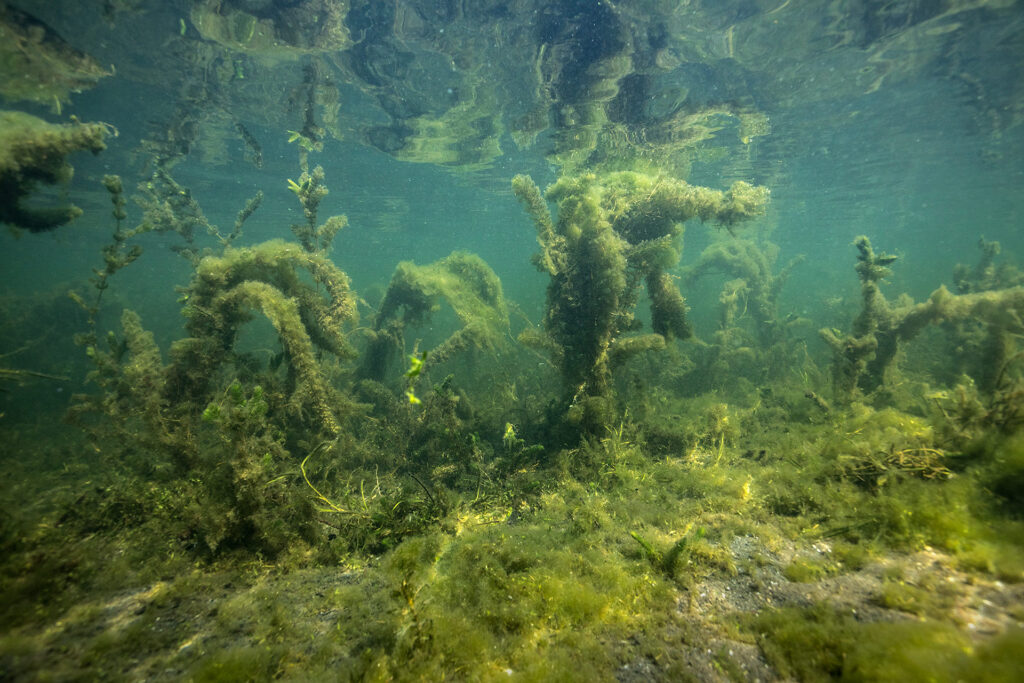
I photographed the bottom of Little Millers Bay with the intention of later developing a series of underwater panoramas, most of my compositions being finalized at home, in my studio.
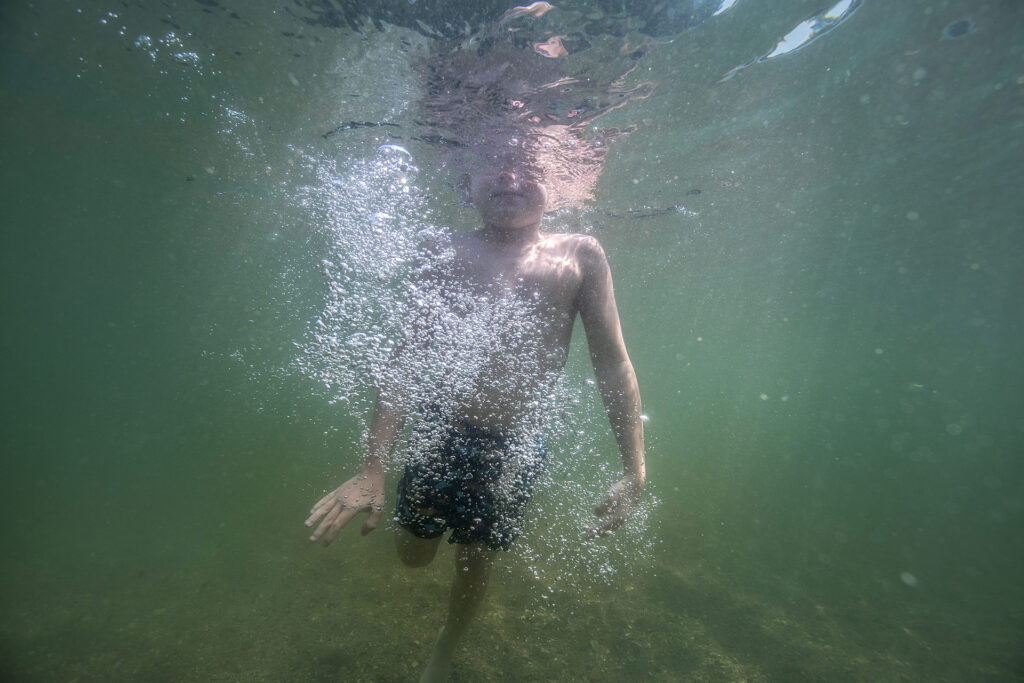
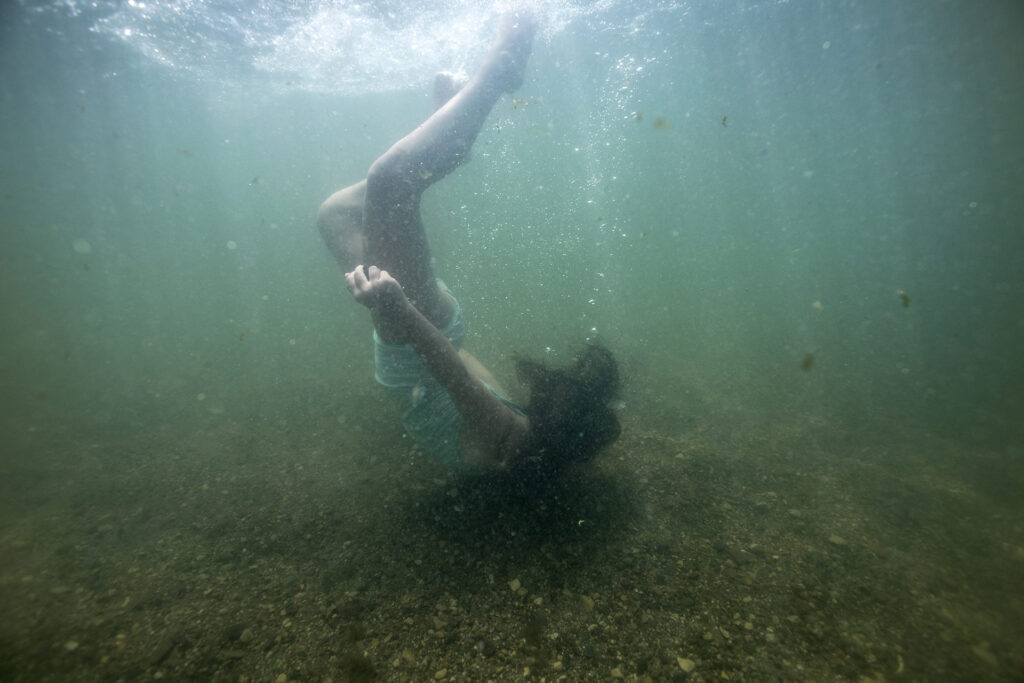
I also photographed swimmers, particularly children at play—who delighted in posing in the water and readily played along. The turbidity of the water gives these images an unreal, dream-like, and pictorial quality, which I will incorporate into more freely composed works.
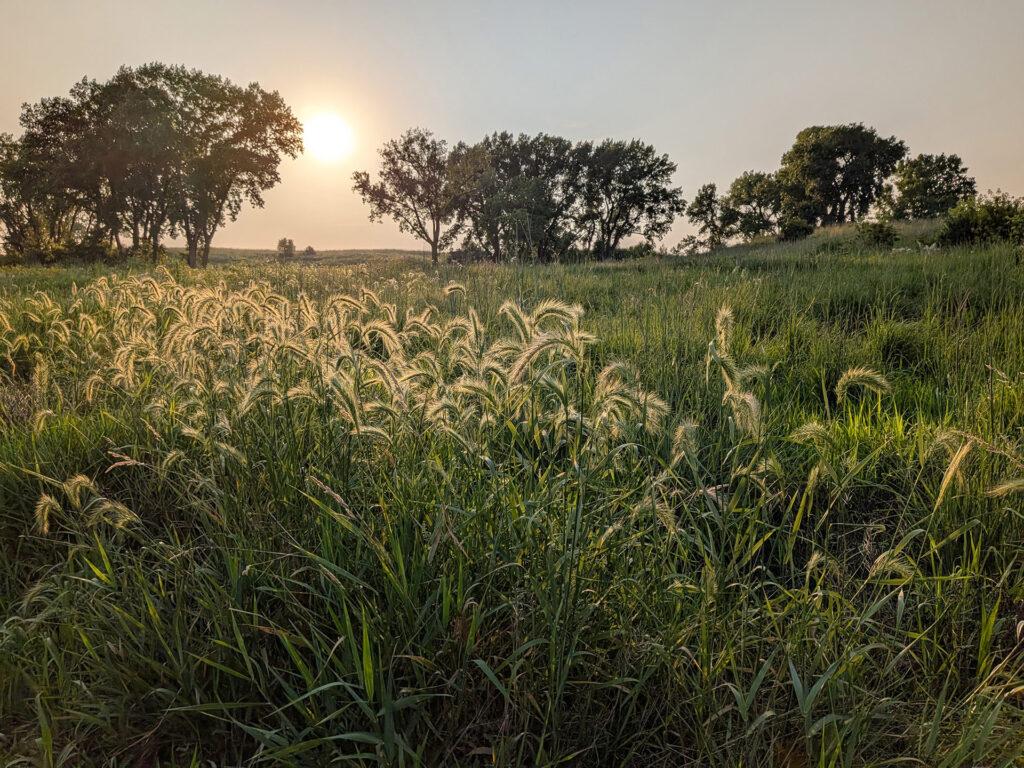
Finally, I greatly appreciated my encounters with the laboratory’s students and researchers, which provided precious opportunities for learning, observation and creative exchange. I was equally struck by the beauty of the Iowa Lakeside Laboratory campus and its surrounding landscapes. During long walks through the fields and woodlands, I observed the richness of the local flora and fauna.