Intro:
What if Josef Albers and John Cage had collaborated at Black Mountain College in 1948, the only year they were both there? What would they have created with today’s digital technology? As a contemporary minimalist, I have long been fascinated by both color and sound.
Premise:
I have been creating minimal digital color block compositions that I stitch into video loops for a few years now. I have always been asked why the videos are silent, why don’t you add sound?
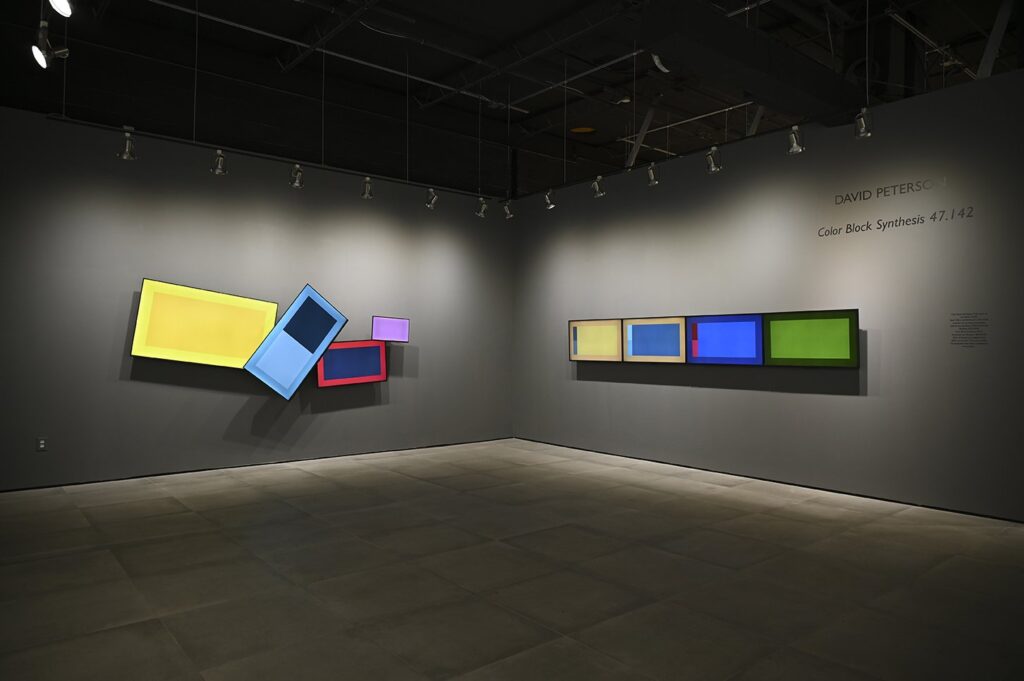
David E. Peterson – Color Block Synthesis 47.142 – 2025
Questions and a Roadblock:
Adding sound to the color block compositions is tricky in a conceptual sense. How do I add sound that is not just static, noise or digital synthesizers? My first idea was to record nature and try to match natural audio tones with color. When I attempted my audio field recordings at the Lakeside Lab there was too much ambient noise from birds, construction and semi-trucks to isolate my recordings as individual sounds. I needed to switch gears. Does Color Theory harmonize with Music Theory?
Research, Eureka and Creating Sound and Digital Color Files:
During lunch, I researched historical attempts to relate color and sound and came across the Chromatic Scale (12 sounds matched to color) and the Diatonic Scale (7 sounds matched to color). Both of these scales would give me the conceptual framework for my project I decided to go with the Chromatic Scale, pairing 12 colors and 12 musical tones.

Chromatic Scale Diatonic Scale
To map out the project, I started with 12 colors from the color wheel and created 12 sound tones from the diatonic scale on the piano. Originally I wanted to limit the sound palette to the white keys of the diatonic scale, but realized that the Chromatc Scale is exactly 12 colors and matches the color wheel perfectly. With my audio software, I used a sine wave to generate the 12 tones, so that they wereneutral sounding. The neutral sound of a sine wave is smooth and has a pleasant beginning, middle and end when played. I created five octaves of the twelve sound tones (60 sounds) and five tonal variations of the twelve colors in my photo editing program (60 colors). I then paired each sound with its corresponding color, building a Color Sound Library of sixty unique color–sound relationships.
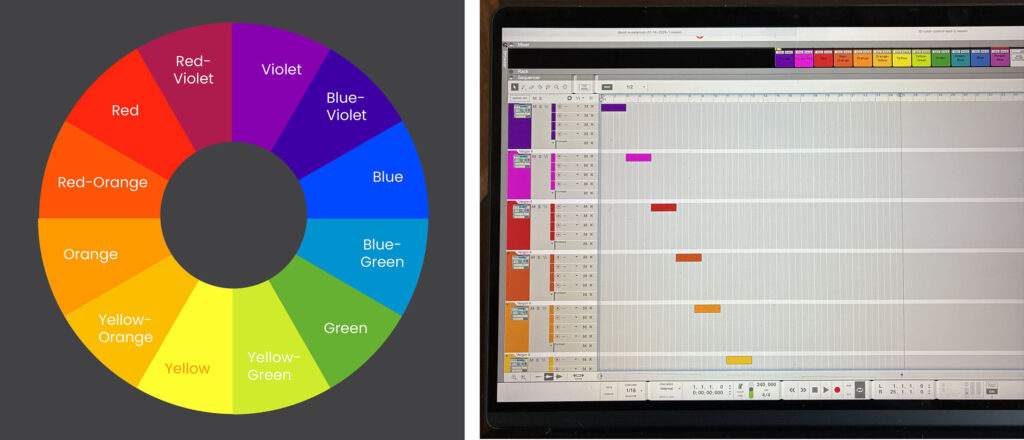
Color Wheel Laying out the color sounds in my audio program
Building the Project:
Time to pick color combinations for my color block compositions. I decided to do two colors per composition so that when the sounds play with each color block composition it is almost like an unexpected chord per diptych. I made three color block templates. Every color–sound pair was assigned a number on a piece of paper and drawn randomly to determine each color-sound block diptych.
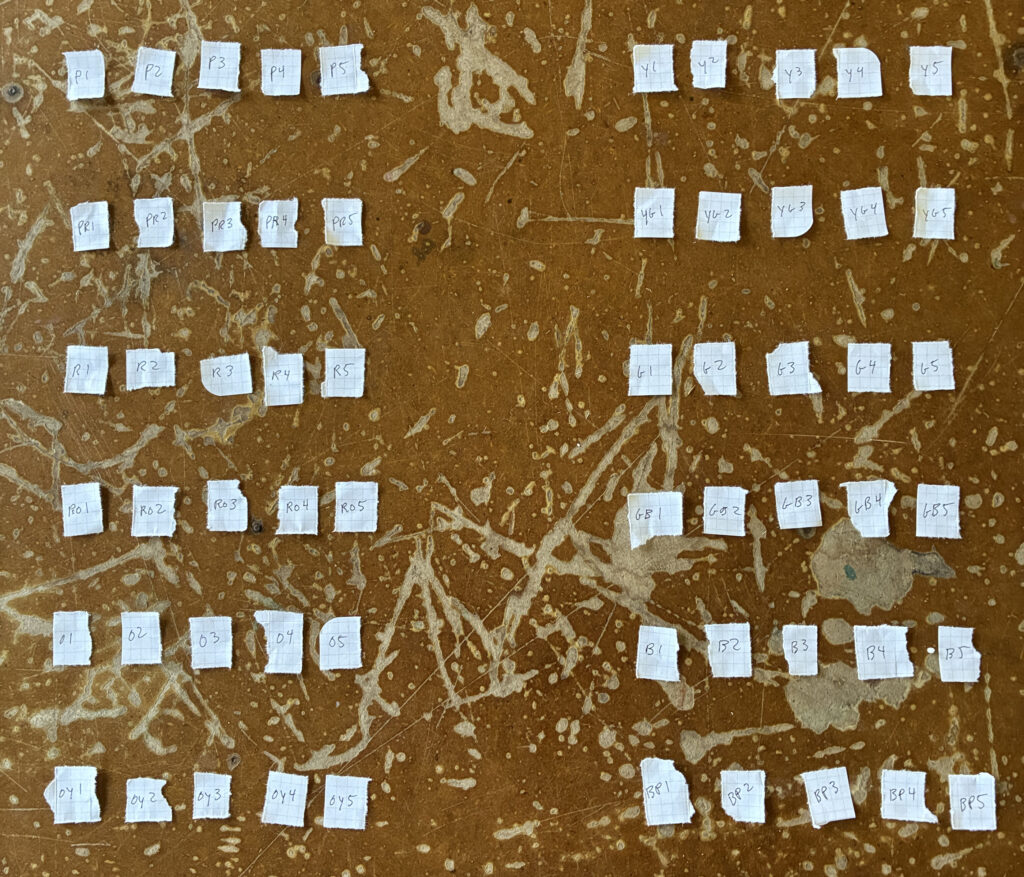
Color codes on small pieces of paper that were drawn randomly
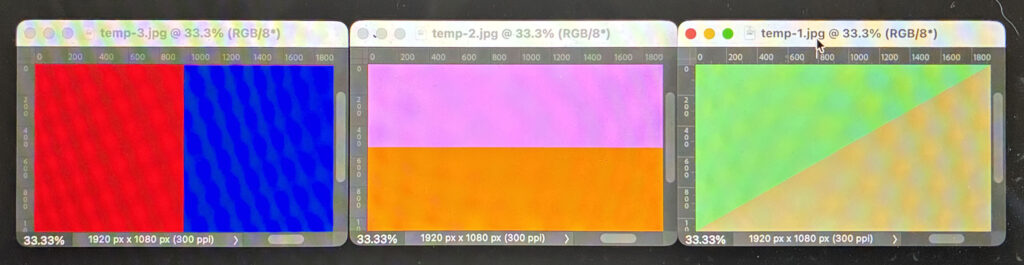
3 color block diptych templates
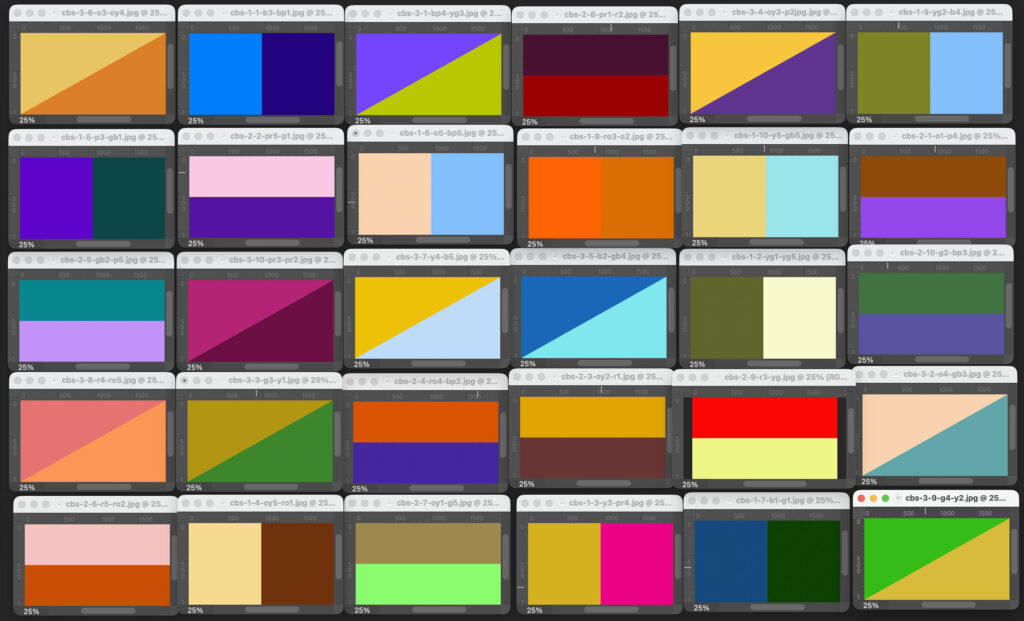
30 color block templates with random color pairings
The diptychs with their matching color-sound pairings were assembled into three independent looping video sequences that were randomly shuffled in my video production software. The installation became a continuously changing composition in which neither the visual nor the musical relationships repeat in exactly the same way. Randomness is important for this project because it gives it an overall organic feel rather than a static and stiff feel.
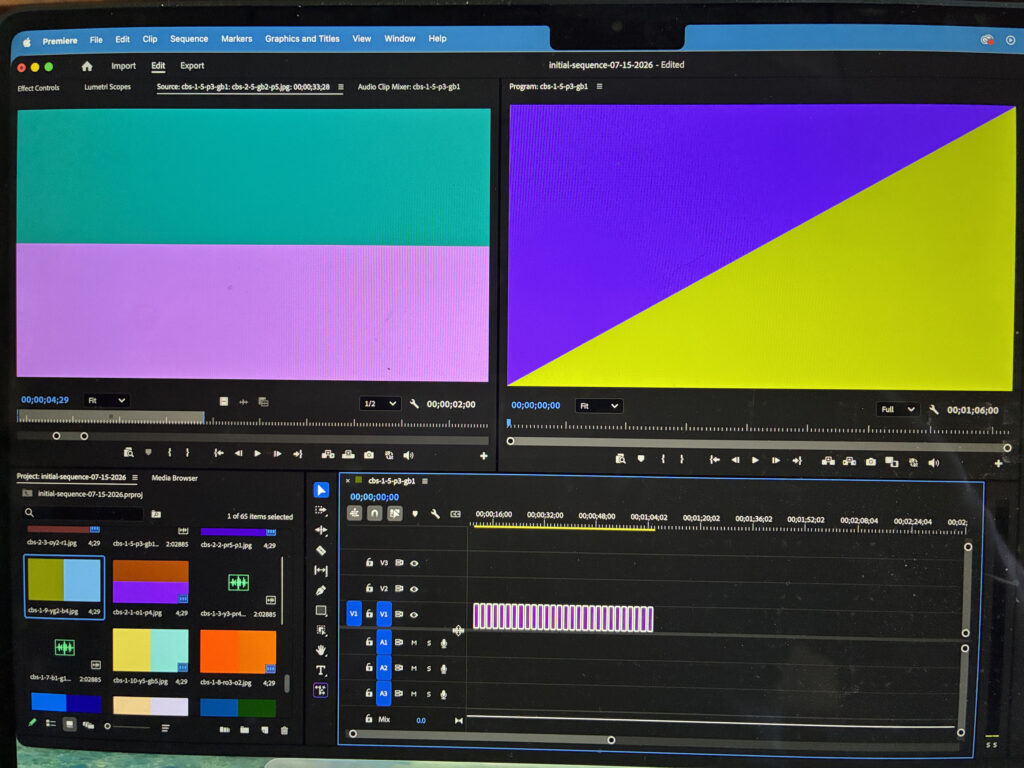
Building the color-sound combinations in my video editing software
The 60 colors became 30 two-color diptychs distributed across three un-synchronized tv displays, allowing six audio tones to be heard simultaneously at any given moment while each color block composition is viewed during the video loops.
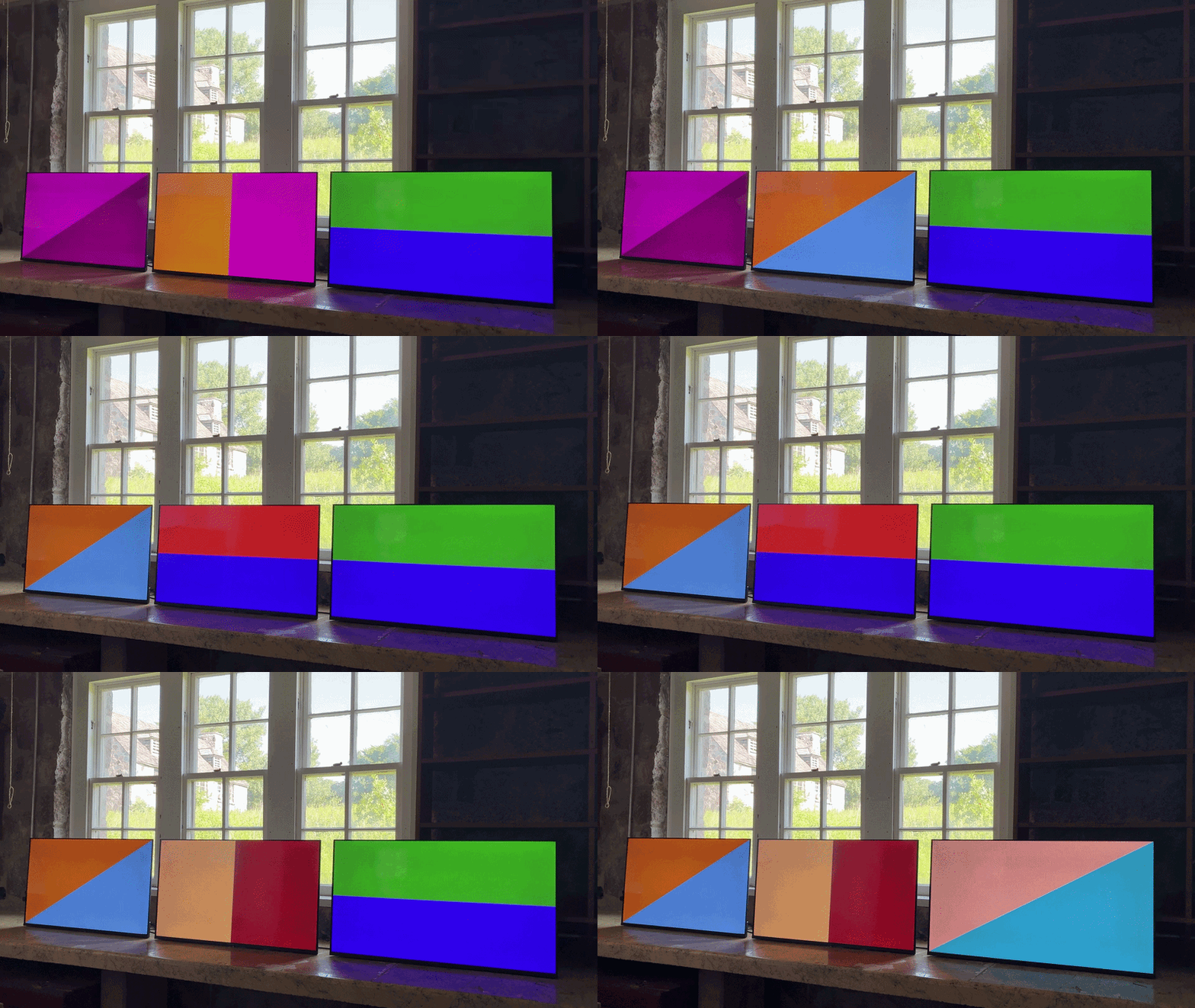
Three – 40″ LED TV’s with 30 random sequences of color-sound diptychs
Result:
The installation transforms color into an evolving musical language. Because every pairing is randomized, no sequence repeats exactly, allowing viewers to experience an endless dialogue between sight and sound. Rather than illustrating music with color—or color with music—the work treats both as equal
visual and sonic materials capable of improvising together.
In many ways, Color Block Synthesis 60.60 imagines the conversation that might have emerged had Albers’ investigations of color and Cage’s embrace of chance intersected through today’s digital tools.
Side Project: 60 colors looped, Three Tv’s, Semi-trucks, babbling brook and walk to lunch
60 colors-sound combinations , 3 loops going at an incredible rate of Color Block Digital Drawings in order left to right, Purple, Purple Red, Red, Red Orange, Orange, Orange Yellow, Yellow Green, Green, Green Blue, Blue, Blue Purple. Each video loop starts at a different point to create its own unique loop. Video loop 1 was paired with sounds of a babbling brook and birds: video loop 2 was paired sounds of semi-trucks passing by: video loop 3 was paired with the sounds of walking to meals. Thoughts while creating and enjoying the project: All of the colors in the Prairie, you just have to look closely. Color wheel spinning, semi-truck wheels spinning, doppler effect, my process of working in my audio and video software left to right, my mind spinning, time flashing, cycles of water, a fixed schedule of meals.
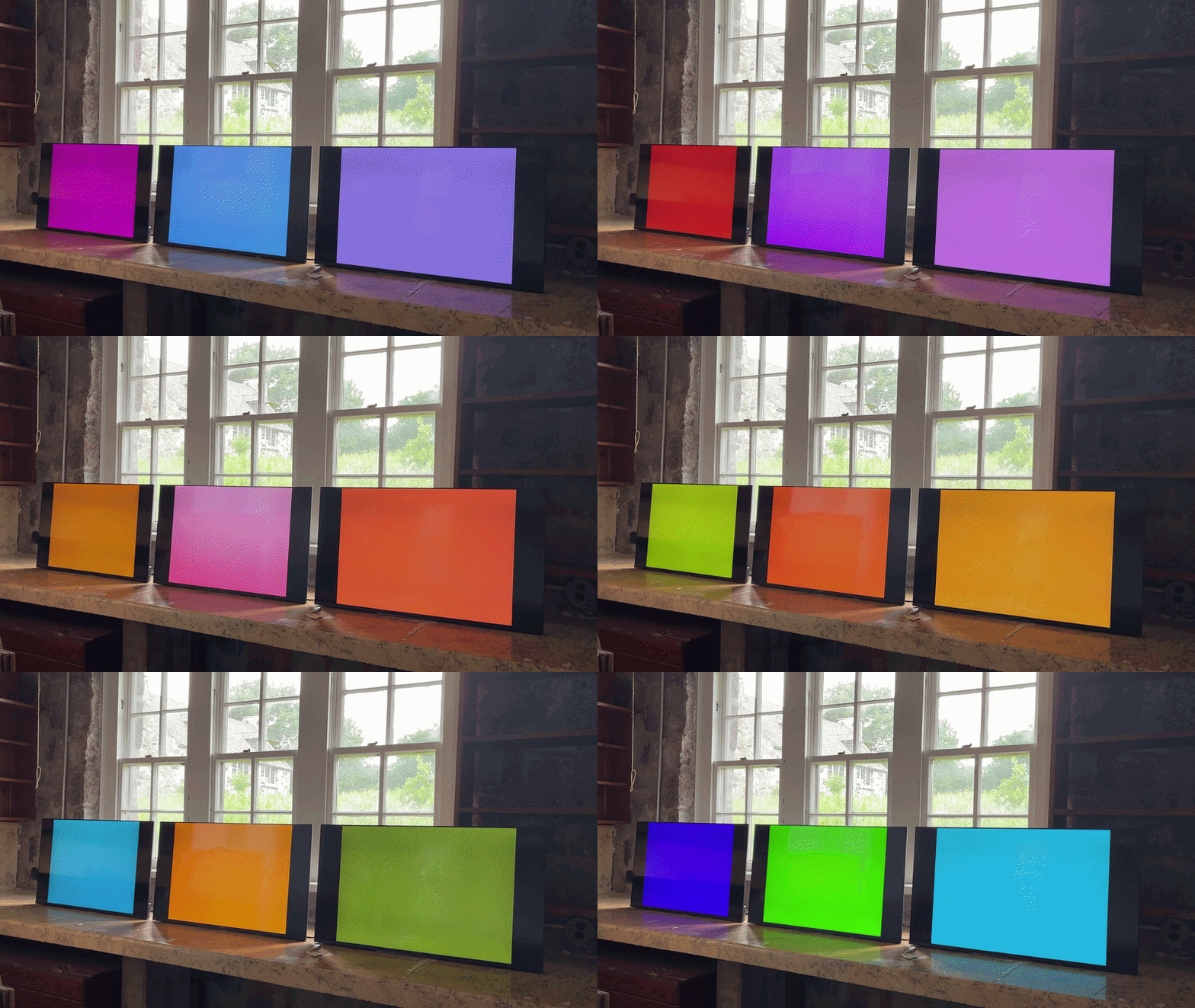
3 – 40″ LED TV’s, 60 color cycles
Side Project: Wind Turbines and Semi-Trucks (Last Day)
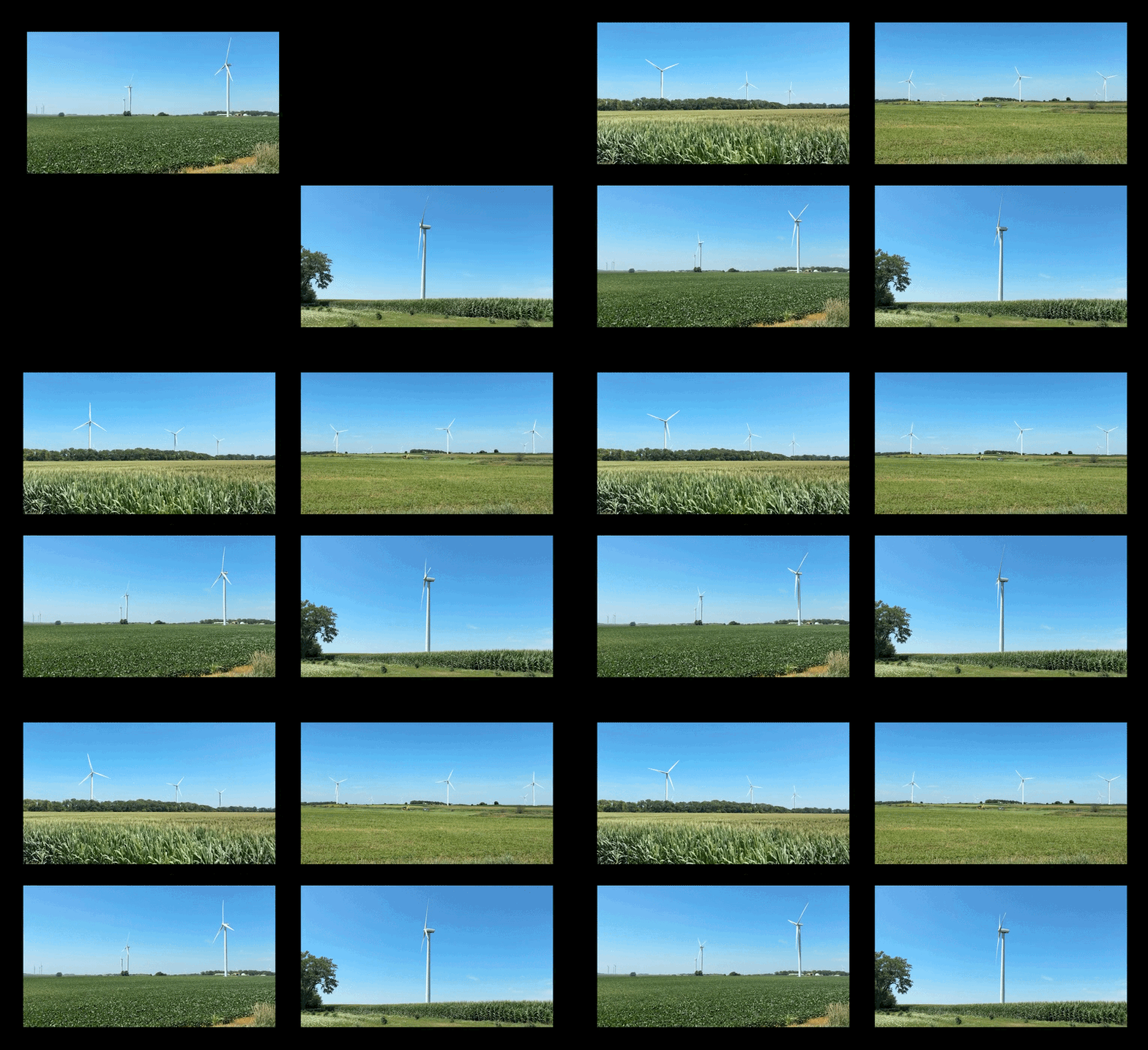
When I drove to Lakeside Lab from Sioux Falls S.D., I was mesmerized by the giant white silent wind turbines that dance across the farmland. On my last day of my artist residency I went out into the country and made four video recordings of the wind turbines. While back at Lakeside Lab I recorded 4 semi-trucks going past on the highway. The 4 semi-trucks field recordings are paired with the 4 wind turbines videos. I imagine this as an immersive installation on four giant walls with surround sound of the doppler effect semi-trucks. The end result, is a focus on these two manmade visual and audio infringements that I find to be relaxing when they are paired together.